



🎧 Sean Evans, Rhett & Link on Building Their Biz (and Each Other)
I talk to the top YouTubers, now business partners, about how their deal happened, hacks for staying fresh ('therapy'!) and growth strat: 'Brands are still way behind in the conversation'

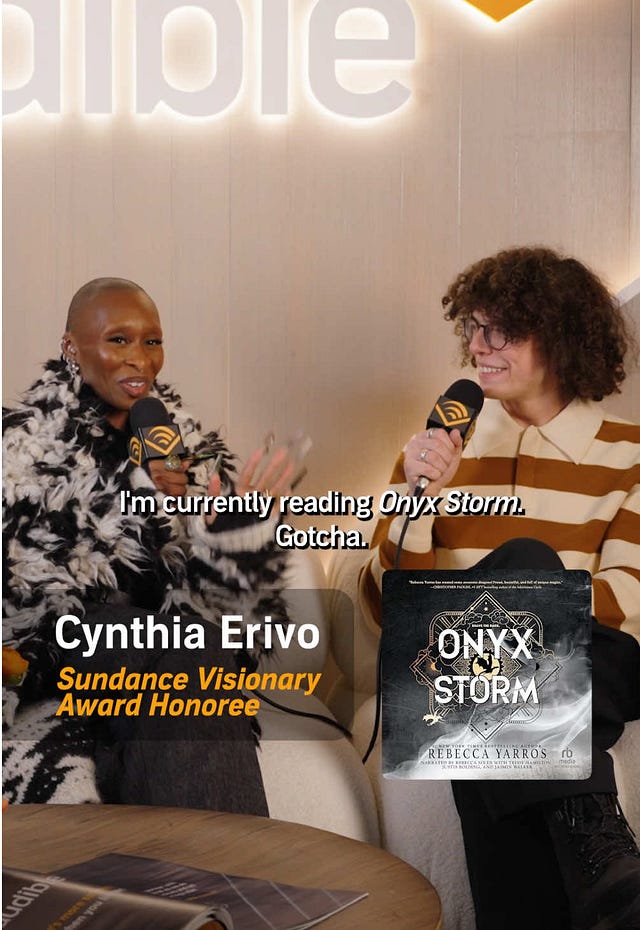
After spending a couple of days in Park City over the weekend, I can report that the fate of TikTok was very much not on the minds of creators who attended the Sundance Film Festival this year. They were more focused on hobnobbing with filmmakers and CMOs, adding their voices to the unique mix of culture and commerce that bubbles there. Reece Feldman was conducting social media interviews with the likes of Cynthia Erivo inside the Audible Lounge, where Brittany Broski also mingled with festival stars.
Jordan Howlett (aka Jordan the Stallion) stopped by UTA House to participate in a live recording of The Ankler podcast that I moderated about how creators, marketers and filmmakers are collaborating (you can read more about it here and listen to the pod here). And up the road in Deer Valley, BrandStorytelling hosted YouTube creators Joe Penna, Kinigra Deon and Michelle Khare as part of its first-ever “creator day.”
 Tiktok failed to load.
Enable 3rd party cookies or use another browser
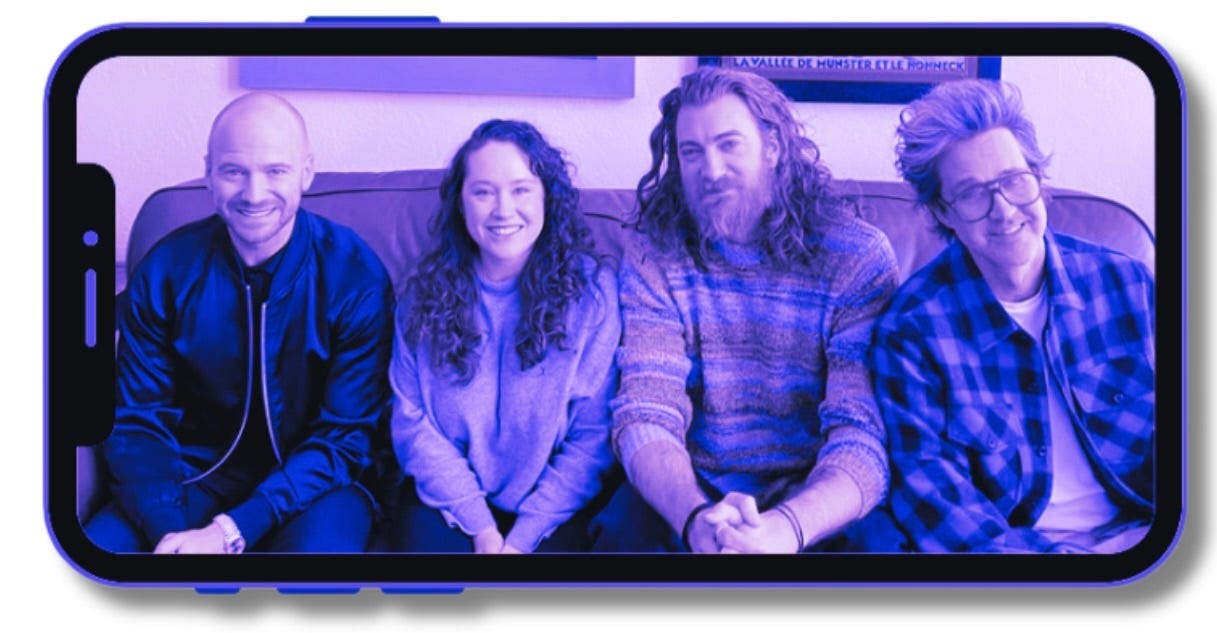
It was in Deer Valley where I sat down with Hot Ones host Sean Evans and YouTube stars Rhett McLaughlin and Link Neal, three guys who have led the charge on blurring the lines between filmed entertainment, digital creation and media moguldum. We recorded a special episode of The Ankler podcast, and I’ve got highlights of our often quite hilarious and endlessly smart conversation below (the full conversation is in the pod).
In December, Evans was part of a consortium of buyers that acquired his popular interview show (and his whole company, First We Feast, with its 14 million YouTube subscribers, roster of spicy shows, hot sauce line and more) from BuzzFeed for $82.5 million. I interviewed Sean back in 2022, and even then I could tell he was hungry to do something more with Hot Ones, which started as an oddity on YouTube and has transformed into the internet’s version of a late-night talk show.
Now Evans and First We Feast CEO Chris Schonberger are thinking about ways to expand the Hot Ones universe while still giving fans more of the spicy chicken wings they love. The 14-month process to split from BuzzFeed “was kind of a rollercoaster the whole time — a little bit of its own season of Succession — but we made it out the other side,” Evans tells me. “It does feel like the wind is at our back.”
Soros Fund Management led the investment, but it was the participation of Mythical Entertainment — the media company started by Rhett & Link, as they’re known to their 19 million (and counting) YouTube subscribers — that most intrigued me. Today Mythical is a 100-person-plus company with multiple shows and creators under its umbrella. And Rhett & Link have made it their mission to help other creators take ownership of their work and their business. In 2019, for instance, Mythical acquired the Smosh brand for less than $10 million after its parent company went bankrupt, only to sell it back to original co-founders Ian Hecox and Anthony Padilla four years later.
“If we can be even a small part of the story of another creator taking back something that they initiated, and then taking the reins and leading,” Neal says, “that’s the type of story we love and we want to champion.”
'Creators Should Be in Charge'
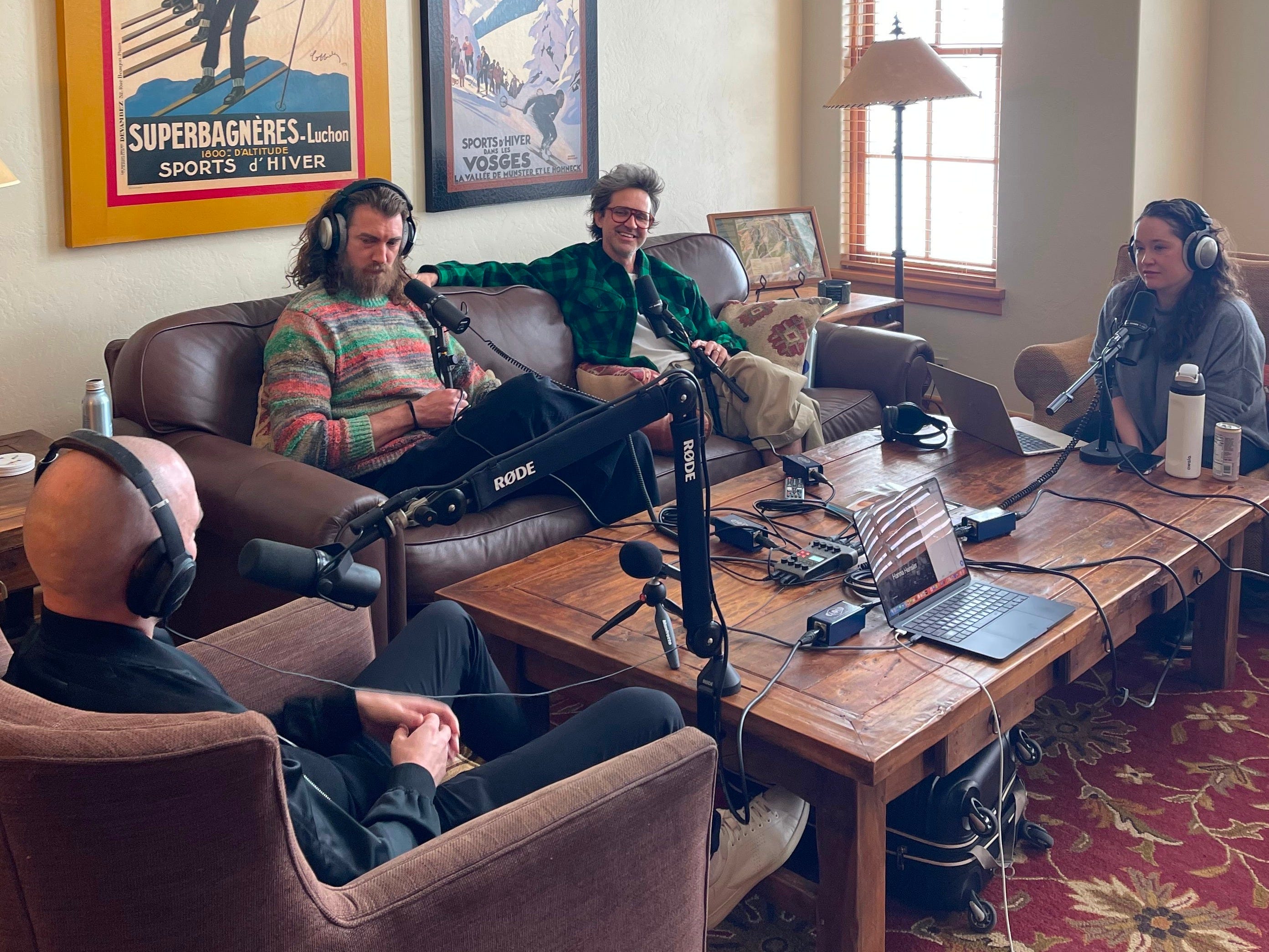
From 7,000 feet up, these three YouTube veterans gave me the 10,000-foot view of their shared history, plans for 2025 and a few big ideas for expanding their brands. Boneless Hot Ones, anyone? They also revealed why they’ll be gunning for Emmys this year (hint: It’s not for creative clout, they’ve got plenty) and how they keep their content fresh after 20-plus seasons of both shows.
Let’s start with the news you dropped at the end of last year. Essentially, Sean, you are part of a move to take Hot Ones independent. When did you and Chris start thinking about going it alone?
Sean: Since we started the show, this has always been something that we’ve been trying to work towards. There have been, obviously, a lot of challenges along the way, but overall I had this North Star of doing the show and feeding the audience and this group that has supported us since we first started. And then, because of some of the macro conditions in the media space in general, there became this opportunity where we could kind of extract this Jenga piece and do it in a way in which we’d have real skin in the game and have more control over the future of the show and the shape of the brand. It was a 14-month process, and it was kind of a rollercoaster the whole time — a little bit of its own season of Succession — but we made it out the other side. It does feel like the wind is at our back, and I’m excited to see where we take it from here.
Rhett and Link, you’ve known Sean for a bit. You appeared on Hot Ones in 2018. Who approached who about Mythical Entertainment being part of this deal?
Rhett: We’ve known the Soros Fund Management guys for a while, and they knew that we’re interested in being a part of this kind of story. Being able to be in charge of — and leading creatively — the thing that you built is something that’s really close to our hearts. And so we jumped at the opportunity to get involved.
Link: If we can be even a small part of the story of another creator taking back something that they initiated and then taking the reins and leading, that’s the type of story that we love and we want to champion. We believe that creators should be in charge. When there’s that type of alignment, you get really good products, and you get a really good connection with an audience because they can tell that you’ve got a real stake in the game.
Hot Ones and Good Mythical Morning took these different paths to ultimately end up at a similar point. Rhett and Link, what did you learn from your journey as independent creators?
Link: We were in the middle of nowhere in North Carolina. I love Harnett County. I love Buie’s Creek, but there’s one flashing caution light. There wasn’t a Complex Media or anyone else talking to us back in the day about how we might work together. We just had each other and a wild hare of a dream. We also had kids and wives, so we were really motivated to try to make something work. But without any relationships or connections, we had to bootstrap the whole thing. When the opportunity for partnerships came along, initially we were pretty skittish. Because we were a bit paranoid and we had some trust issues with Hollywood types, we had to find our own way. And we had a few slim years where it was pretty scary. But because that was our mentality, we just kept driving at it, and it worked out.
Sean, even though you built Hot Ones within Complex, it was pretty entrepreneurial from the jump. What did you get out of being part of a larger media organization?
Sean: The spirit of it has always been independent because when we first started the show, it was not a major priority in the programming flight of Complex. It basically allowed Chris and me to do a skunkworks in the corner, with no one really paying attention to what we were doing. Very early on, I saw exactly the trajectory of where it was going, and I knew at some point it would take over this giant hulking media company that we were built in the context of. You get to a point where your success — it has this effect where everybody leaves you alone and lets you do your thing.
Even though it was a sometimes complicated journey and an emotional journey, and there were challenges along the way, I wouldn’t change anything about it. And I think that 10 years really served as good practice for now. We had that whole decade to figure things out ourselves.
It was nice to be able to make mistakes with a little bit of a safety net. Or, especially early on, to use somebody else’s resources rather than taking on investment or trying to do it ourselves.
But at the same time, I’ve done this show for a decade and we’re in our 26th season and over 350 episodes, and part of me can’t help but to think that if we would’ve taken a left here, or would’ve tried to pull the trigger on taking it independent at a different time, or tried to rebuild the channel and lost the Hot Ones name and the trademarks and the catalog and done the Spicy Interview Show with Sean Evans, who knows if that would’ve worked? I don’t think I’d be here unless we played all the cards right, exactly when we were supposed to play them.
Link: But it does sound like you thought about doing, it would have been like, Boneless Hot Ones?
Rhett: Those are technically not wings. They’re just pieces of breast meat.
Link: It’s just a nugget. Don’t do it. It makes me angry. I mean, the choices you made allowed you to not have to get rid of the bones. And I think the bones matter.
Sean: That’s metaphorical and literal.
Rhett: I would say, 15 to 20 percent of the time, I prefer not having the bones. Just because I don’t want to work for it. I think we’ve got a spinoff show, The Spicy Boneless Interview with Sean Evans.
Sean: I’ll do another show, same format.
Rhett: Have you done a vegan episode?
Sean: Of course! We have a big Hollywood roster. You cannot interview the type of people we interview without offering a vegan option.
Link: And he didn’t have to create a new show to do it.
Rhett: I’m just looking for opportunities.
Sean: That’s why I like that you’re in the fold. You’ve always got the wheels turning.
Link: You made the right choice, is all I’m saying. The bones stay in the picture.
Who knows where you’d be today if not for the bones. It sounds like you’re really at peace with your journey, but are you jealous of anything Rhett and Link were able to do as independent creators?
Sean: My whole career in the media industry has kind of felt like that final scene in Fight Club where all the buildings are falling down around you. There’s always this anxiety of doing the show when you have the problems that the digital media industry has had over my career. When I came in, it was at its peak. It’s gone one way. Hot Ones has gone the other way, thankfully. But living through that has always been a challenge. You have these ideas about these big bites that you can take or other shows that you can do or talent that you want to bring in. But we were never in a place where these companies were in a position to actually invest in this vision that we had.
So of course there’s times where I think about, if we just had some water and sunshine at that moment, what that could have bloomed into. But like you said, I am at peace with it. And I’ve always admired them. I’ve always looked —
Link: Yeah, let’s get back to that part. I do remember the question was how are you specifically jealous of us?
Sean: Well, they are the blueprint. And in this venture there is this synergy where we are kind of YouTube’s morning show and YouTube’s late-night show. But I also love that they’re a duo that’s made this work for so long because that’s like me and Chris. And when you’re in this kind of creative marriage, it is like a marriage and you have to invest in the relationship. It’s hard enough to go through something like this and Plinko-ball through the entertainment industry just by yourself.
Your turn, Rhett and Link. You talk about those lean years. What were some of the challenges of being independent?
Rhett: We are incredibly fiscally responsible in every single step that we make, and we have to make sure that every single thing that we’re doing is working to continue to maintain this team that we have built. And so you’re trying to essentially find every way that you can responsibly monetize these brands you’re developing. A lot of times you’ll talk to somebody in traditional media, or somebody who’s had some investment, and they’re taking a bigger chance on something, where we have to be much more calculated. It’s worked out really well for us. But sometimes your ideas and your dreams are a little bit bigger than the profits that you’re generating. Having that kind of backing and having that safety net, there’s probably some things that we would’ve tried that we haven’t tried.
Both of your shows could easily be on TV, and you’re each going to submit for Primetime Emmys this year. Why are you seeking that recognition from Hollywood?
Link: We know that the worlds are coming together. It’s been disparate paths, but now there’s this convergence. When you turn on your smart TV, you can go to your YouTube app as easily as you can go to your Max app. If we continue to hold our production value as high as it is, it doesn’t matter what you’ve clicked on. Once you get there, we are giving you that experience.
Rhett: Specifically why we’re interested in an Emmy — first of all, there’s a thing about being in L.A. and when people come over to your house, there’s an Emmy on the shelf, which is great at parties. (Laughs)
There’s a couple other reasons. While I think Gen Z in a lot of ways is like, we just don’t care, I think there’s actually something to a more curated group of people recognizing, “Hey, this is what’s connecting culturally.” And the content that is being made on platforms like YouTube, the content that we’re making, is connecting culturally. And ultimately that’s what those awards are about. What is connecting with an audience? What is changing people’s lives? What is in that ongoing conversation?
The other part of it is, all of this is fueled by brands. A lot of the brands are still way behind in the conversation. If you just look at the ad budget for The Tonight Show versus our shows, it’s just incomparable. It doesn’t make sense. Because the people who are making those decisions in those positions of power at those companies are still looking to those traditional institutions like the Emmys to be like, “Okay, where are we supposed to put our money?” We want to be in the middle of that conversation so they can be like, “Oh, okay, this is a safe investment. This is an audience that we should be connecting with.”
Sean: Even though Hot Ones is a novel concept and very internet-y on paper, we really are traditionalists in the way that we approach it. I was shaped more by traditional talk show hosts like Conan O’Brien and David Letterman and Jimmy Kimmel and Howard Stern. If you look at the caliber of guests that we book, at the show’s place in culture, if you look at the eyeballs, we are absolutely worthy of comparison and competition with those traditional late night shows. And I don’t apologize for it.
Hot Ones just kicked off season 26. And Good Mythical Morning is on season 27. How do you stay creatively motivated after all these years?
Sean: I grew up on real escapism television and know what that can mean for people. I picture the person who on Thursday, during their lunch break, watches Hot Ones while they’re working in their cubicle. There’s this dopamine hit that you’re giving them, and they show up by the millions now at this point. So I think that that’s just a big responsibility and motivation enough to just do the work.
And if you can still eat all those hot wings, day in and day out —
Sean: That’s the other side of it too. I remember how much it sucked to have a real job. So if I just have to eat Da Bomb once a week to not have to go back to that existence, then that’s fine, I’ll eat the damn wing.
Link: One of the things that keeps us motivated is we’ve realized that what we do is a service for our audience. They count on us every weekday as just a nice, comfortable place to chill out. We’ve also learned how important it is for us to work on our friendship. Rhett and I, we’re putting our friendship on display, so it’s got to be authentic. Living the dream for us involves continuing to prioritize our friendship because that's the gift that we keep giving to our audience, so to speak. There's a ton of psychology, and honestly therapy, involved in keeping this a healthy space for us to be engaged and to do our best work and help people.
Rhett: The other aspect of it, in terms of the longevity and continuing to have new ideas, is our team. We did everything just the two of us for a long while. And if that was still the case, we would’ve cycled through a lot of things just not to get bored ourselves.
Link: Or burned out.
Rhett: But we have an incredible team of writers and producers on Good Mythical Morning. We all sit together once a month in a big writers meeting, and we go through all of the ideas that they’re coming up with, and we shape them and discuss them and develop new ideas. That keeps us involved on the ground floor with the creative direction, but it doesn’t mean that we have to be thinking about GMM all the time.
Sean, now that Hot Ones has been unleashed, what’s next?
Sean: Now I think you look at the things that we’ve wanted to do in the past, more shows, more talent. I’d love for a programming flight and for another show in the fold to get as big as Hot Ones. I’d love for another host to have a profile that just soars higher than mine in the constellation of pop culture. But the main thing is always the main thing. There’s three 12-episode seasons of Hot Ones a year, and that’ll always be where my priority, where my passion, where my love is. That’s the most potent snack for the audience that supported us for so long.
Link: Dance with the one that brung you. I feel that. How do you feel about boneless thighs, though?
Sean: I really haven’t thought about it till now, but now the mind wanders.
Rhett: That’s good on a sandwich.